A Zero-Sum Game: Envirothon
Envirothon brings attention to important environmental issues, but when the focus is on winning rather than making an impact, does it help or hurt more?

I shivered as the cold air hit my windbreaker. Around me, similarly freezing Houstonians weren’t ready for a ‘bone-chilling’ 40-degree Saturday morning. Looking for a way to warm up, I spotted students from another school playing Hacky Sack. I joined in, and soon, laughter radiated through the air.
We were sent to our stations. My four teammates and I, along with two other teams, began walking on a resplendent forest path. As towering Sycamores framed the sunrise and elegant Cottonwoods danced in the wind, I felt calm and still. I introduced myself to the other teams. We all joked about our schools, favorite shows, and the like. I felt a strong connection with some. A feeling that if we lived in the same town, we could be friends.
We arrived at our first station, the competition started, and I felt a jarring shift. The jocularity was gone. I asked another competitor if there was Diameter Tape, a common forestry tool, and they unironically said, “was that supposed to be funny?” I was so confused that I nearly started laughing. The biting tone, expression of disgust, and absurdity of their statement were the complete antithesis to their formerly friendly and social self. That feeling of connection, even camaraderie, as we all faced the same looming challenge, simply — shattered.
This interaction was my first indication that the Texas Envirothon competition would be anything but my former impression of how the environment should be treated.
What Even is Envirothon?
The Envirothon Competition is a contest between teams of five members. Each member focuses on one of the five content areas: Soil Health and Land Management, Forestry, Wildlife, Aquatics, or Current Issue. During a “field test,” each team would receive 5 tests assessing their knowledge of the content areas, comprising 500 out of 700 total points. Then, each team would have one week to prepare a 20-minute oral presentation over a case study, which comprises the remainder of the score. This year, the focus was on land management, so we were tasked with restoring a damaged ranch and forest property.
These rules encourage content and speaking expertise, both of which I have no problem with. From the surface, all seems well. My problem is what these two things incentivize. Today, I’ll discuss how the heavy content demand discourages long-term environmental interest and how the competitive format of Envirothon can pervert the beauty of nature and community into a grotesque battleground.
Rote Memorization
Take a second and think about something you learned and find super interesting — alright, got it?
Chances are, you didn’t develop a passion for it while sitting in a class or staring at a textbook. You probably watched a fascinating video or talked to a friend who communicated it to you with excitement. You didn’t just learn it, you experienced it. See, that’s how I gained my appreciation for the environment. I lived on three continents and had an adventurous father who took me on hikes all over them. As I grew older, I heard about things from friends or people on birdwalks with my parents, and I researched them myself. I feel that these visceral experiences were what truly sparked my fascination with environmentalism.
Envirothon presents so much content to cover, and many schools lack the resources to effectively teach this content. At my school, Envirothon students would meet once every two weeks for 30-minute meetings. We’d hear announcements, take a quiz over our assigned homework, discuss the answers, hear briefly about a topic, and then be assigned more homework for next time. Rinse and repeat.
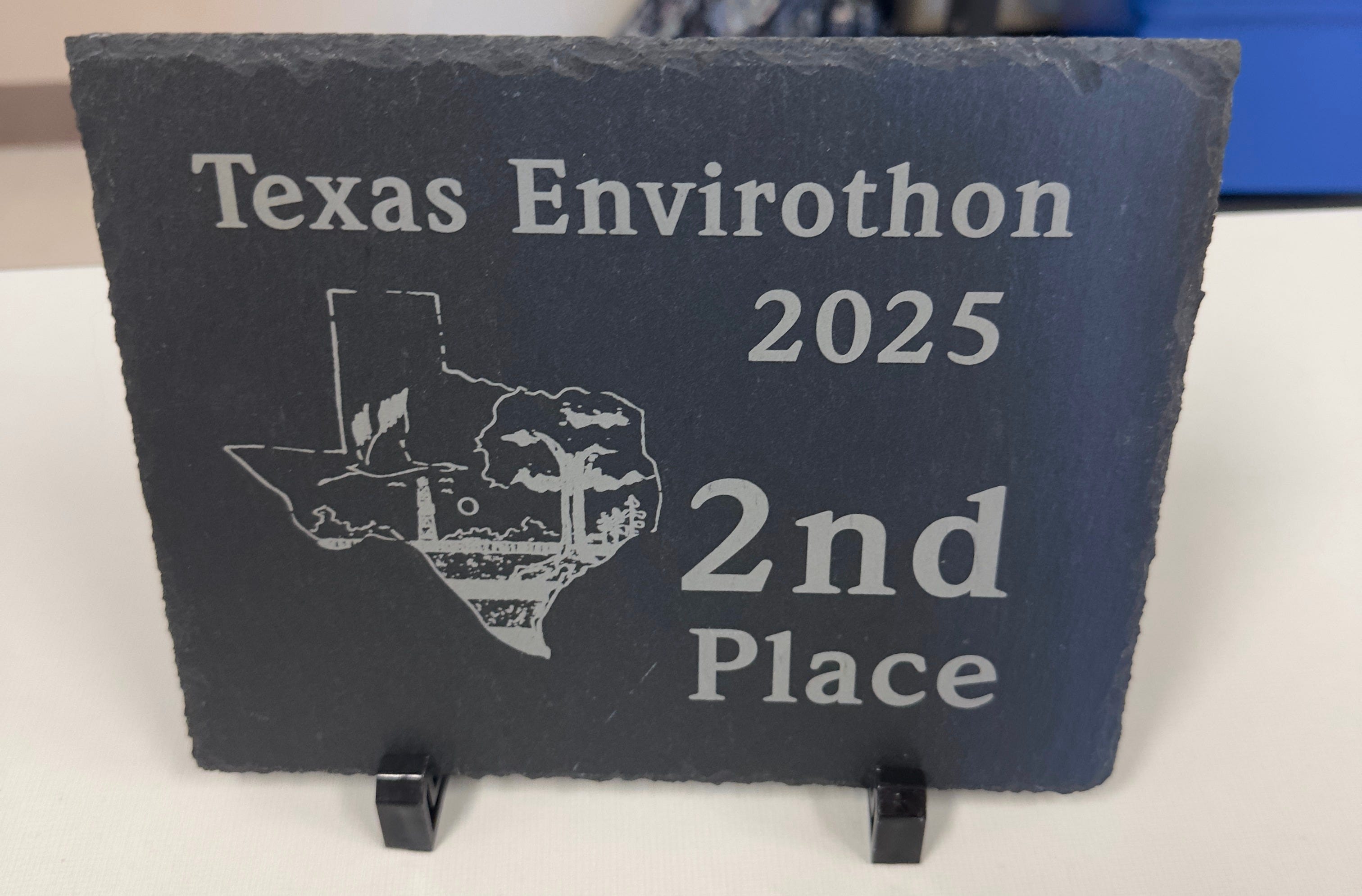
Was it effective? Sure. I scored 2nd out of the 15 teams, and many from our school scored highly as well. But what killed me every week was watching the excitement drain from students’ faces as they sat for another boring lecture after an already-grueling 7-hour day of school.
There are essentially two types of people who join Envirothon. 1) Those who are already environmentally passionate, and 2) those who seek to fulfill school requirements/college applications. For those who are already interested, these lectures render the beauty the students love to mere memorization, and worse still, for the second group, it presents an unappealing visage to those who might otherwise cultivate environmental passion. Rather than presenting the captivating experience of learning for the environment, students are regurgitating information that was regurgitated by students before them. Perhaps the information is there, but the meaning is lost.
Additionally, this ‘efficient’ learning structure used to cover all the content necessary for the field test is poorly retained by most students. The majority of the study materials provided by Texas Envirothon are lectures or presentations. Unfortunately, the competition is set up so information needs only to be recalled once, on test day. As a result, the busy lives of students filled with commitments and pressing deadlines mean procrastination is all but confirmed. Logically, this means the majority of the actual ‘learning’ the competition prides itself on is in the form of cramming. Which, as no surprise to anyone, has been shown to significantly reduce long-term information retention. And who could blame the students for studying this way? They’re shown another boring test, which they don’t care about due to the above issues, and have absolutely no reason to need the information long-term. Tragic, isn’t it?
For these reasons, I sit at my first opinion. The format of the test, the curriculum, the study materials provided, and the effort on the part of the Texas Envirothon team are unsatisfactory. The content and its presentation are stultifying, and the vast memorization demand and single test date result in little long-term content retention. The complete opposite of Envirothon’s vision: “to equip students with the knowledge and skills to educate others, inspire action in their local communities, and promote a lifelong commitment to environmental stewardship and sustainability.”
This disjointed, trivia-style preparation strips the soul out of environmental learning. Rather than cultivating invaluable skills like observation, initiative, and exploration, we’re rewarded more for cramming facts that, without application, are meaningless. If the system teaches us merely to chase points, how are we meant to make a real difference?
Competitive Toxicity
Competitiveness is inevitable for any competition. That’s fine — but it raises the deeper question: should everything be a competition?
The function of a competition is to identify the ‘best’ team. The ones who know the most or did the best. Environmentalism, on the other hand, is a collective effort in which, without the participation of every individual, the crisis won’t be solved. In my mind, these two ideas are inherently conflicting. Environmentalism is adding together everyone’s unique voices and perspectives, but the other is merely a zero-sum game.
I believe this contradiction creates difficulty in student motivation. If students are competing to win the competition, how can they look at their rivals and think, together we could have a positive impact on the climate? That collaborative attitude is what I believe paves the path to actual change in education, action, environmental stewardship, and sustainability.
It hurt to see potential friendships with incredibly intelligent and environmentally-minded people my age (individuals so rarely find), thrown out the window because they were either too stressed about the competition or too competitive to connect on a deep level. It hurt to realize that what should’ve been a shared experience in learning and loving the planet had turned into a silent war for points.
My Ideas for Change
Texas Envirothon will celebrate its 25th birthday next year. During the institution’s life, it has amassed several tools that hold the potential to solve some of the problems it faces.
For the problems it faces with content, it can leverage the connections amassed throughout its life. The Texas Parks and Wildlife Department and Texas A&M Forest Service are strong supporters of the program and send volunteers each year to create tests and judge presentations. Members from these organizations could stop by schools in their area once a year to give additional instruction on fascinating practical science, to provide another source of instruction. Additionally, the Texas Master Naturalist program has local chapters in the majority of Texas counties, providing the opportunity for Texas Envirothon to connect passionate local experts with students teaching content while out in nature and showing the practical application of the knowledge, such as bird, tree, and soil identification in local parks. These individuals could not only excite students about the Envirothon content material but also show the information’s ecological application.
Collaboration is key as well. Year-by-year envirothon content could be adapted to include more connection and plans to work with other environmental groups to succeed. While this is a gross oversimplification regarding the status of the competitive spirit, it could be an effective first step in encouraging collaboration instead of competition.
Then, to address the current lack of long-term memory retention. The problem is solved when students get passionate about the environment. When they interact with professionals and naturalists who explain concepts clearly and with vigor, the students will retain the information better. A nature walk on tree identification and learning the memory and visual tricks used by a naturalist is infinitely more memorable than frantically cramming pictures of trees on the bus ride to the competition.
Envirothon is a valuable institution. Removing the competition is unnecessary, but it needs some rethinking. The planet is too beautiful and too at-risk to be turned into a race. How tragic would it be if the environment collapsed in 50 years, and the failure was caused by no one being able to decide on the best course of action to save it? We need to act now to ensure systems facilitate values of ingenuity, passion, and cooperation above individualistic victory.